Invasive Plant Resources
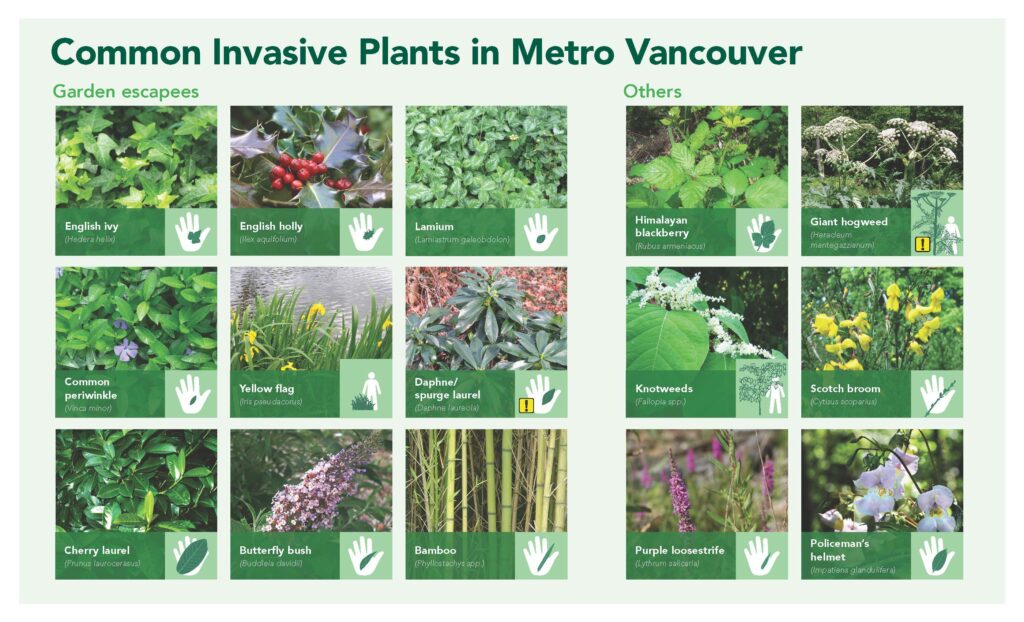
While native plants support insects and provide food and shelter for millions of birds, invasive species put pressure on local ecosystems and reduce biodiversity. Many invasive plants were introduced (either intentionally or unintentionally) by people. This page brings together resources from organizations and community groups working to better understand invasive species and reduce their spread.
From Metro Vancouver Regional Parks’ brochure, Help Stop the Spread of Invasive Species:
What is an invasive plant?
It’s a plant species that isn’t native to our region and also tends to be super efficient at growing and spreading. Because it didn’t evolve here, it has no natural controls (predators, diseases, etc.) to keep it in check.
Why are invasive plants a problem?
There are lots of reasons, but here are a few:
• They affect wildlife by degrading habitat
• They can alter water flow and lead to erosion
• Some contain substances that are toxic to people and animals
• Some can increase the risk of wildfires”
A threat to traditional practices
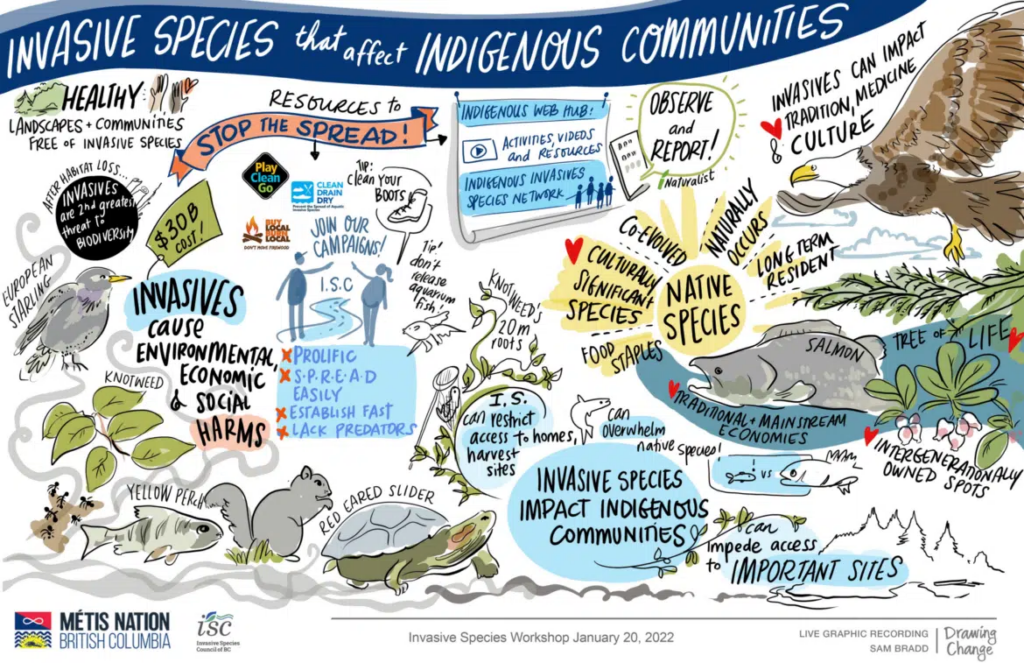
Invasive species can also threaten Indigenous food systems, medicines, and cultural practices by displacing the native plants that people have cared for and relied on for generations.
The Invasive Species Council of BC helps groups work together to stop invasive species from spreading across the province. Their Indigenous Connections page shares how invasive species affect traditional practices and how Indigenous communities continue to guide land care across the province.
From removal to relationship
Much of the plant biodiversity around the Iona Island Bird Observatory is supported by Metro Vancouver Regional Parks staff through invasive pulls, native species planting, and ongoing maintenance. You can take a walk in the park during the spring or fall migration seasons to learn about the nearby native plants. Loop trail posters created as part of Stories in Flight share their connections to birds and people.
Across Metro Vancouver, there are also many hands-on opportunities to get involved in caring for local parks and natural areas, including through:
- The Metro Vancouver Ecological Restoration Team
- Everett Crowley Park Committee’s Stewardship sessions
- Stanley Park Ecology Society’s Dedicated Invasive Removal Team (DIRT) and EcoStewards programs
- Burns Bog Conservation Society’s invasive species removals
- Jericho Stewardship Group’s Stewardship Events
- Burnaby Lake Park Association’s Weedbusters
Some organizations are finding ways to transform invasive plant removal into opportunities for art and community. For example, Free the Fern and the Everett Crowley Park Committee have partnered in the past to host Weeding and Weaving workshops using invasive English ivy.
Resources compiled by Paula Gomez Villalba | Jan 2026
Posted: February 24, 2026
Iona Island Bird Observatory Bird Identification
Posted: November 5, 2016
Butterfly Monitoring 2012-2016
Posted: November 5, 2016
Butterfly Monitoring Workshop

Posted: June 5, 2016
Nightjar Orientation Schedule
To kick off the 2016 Nightjar Program survey season, WildResearch will be hosting orientation sessions near major cities across several provinces and territories. Each session will run about three hours and is a great chance to meet or catch up with some other nightjar enthusiasts and to get in the groove for surveying with hands-on practice. We’ll learn about nightjar biology, the survey protocol, and then have a practice survey together.
British Columbia – email Paul Preston, nightjars.bc AT wildresearch.ca
- June 10 -Vancouver
- June 11 – Victoria
- June 15 – Kelowna
- June 16 – Oliver
Alberta – email Elly Knight or Alessandra Hood, nightjars.ab AT wildresearch.ca
- June 13 – Edmonton
- June 14 – Calgary
Saskatchewan – email Gabe Foley or Amanda Foley, nightjars.sk AT wildresearch.
- June 15 – Regina
Yukon – email Andrea Sidler, nightjars.yt AT wildresearch.
- June 6 – Whitehorse
New Brunswick – email Virginia Noble-Dalton or Alex Dalton, nightjars.nb AT wildresearch.
- June 11 – Hampton
To sign up for an orientation, email your Regional Coordinator at the email address provided above. Your Coordinator will send you details on meeting time and place prior to the event. In general, orientations begin approximately an hour and a half before local sunset time. For those of you who can’t make your nearby orientation session or live too far away, we’re making an online orientation video for posting on the WildResearch website on June 15th.
~ Elly Knight, Nightjar Program Manager
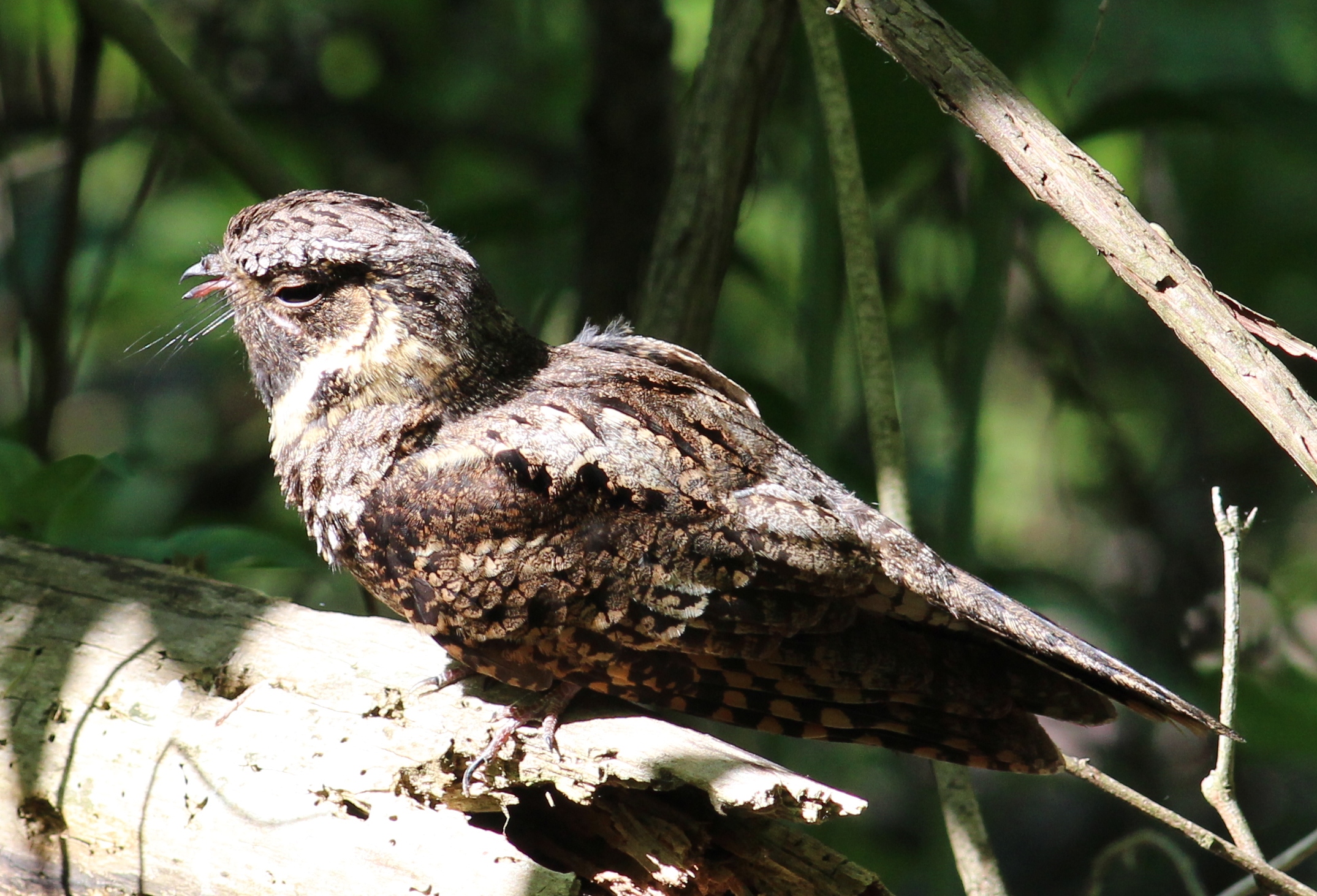 Photo credit: Tom Benson
Posted: June 5, 2016